Deon Nicholas on Why the Next AI Assistant May Not Come From OpenAI or Anthropic

Most AI customer service bots handle a refund request by reciting the refund policy. Deon Nicholas, founder of Espa Labs and previously the founder of Forethought, took a different approach: what if the AI could actually look up the order, make the decision, and issue the refund?
That idea helped Forethought scale to a billion customer interactions a month before its acquisition by Zendesk. Now Nicholas is building Espa, an AI executive assistant designed for people who may never have access to a human assistant.
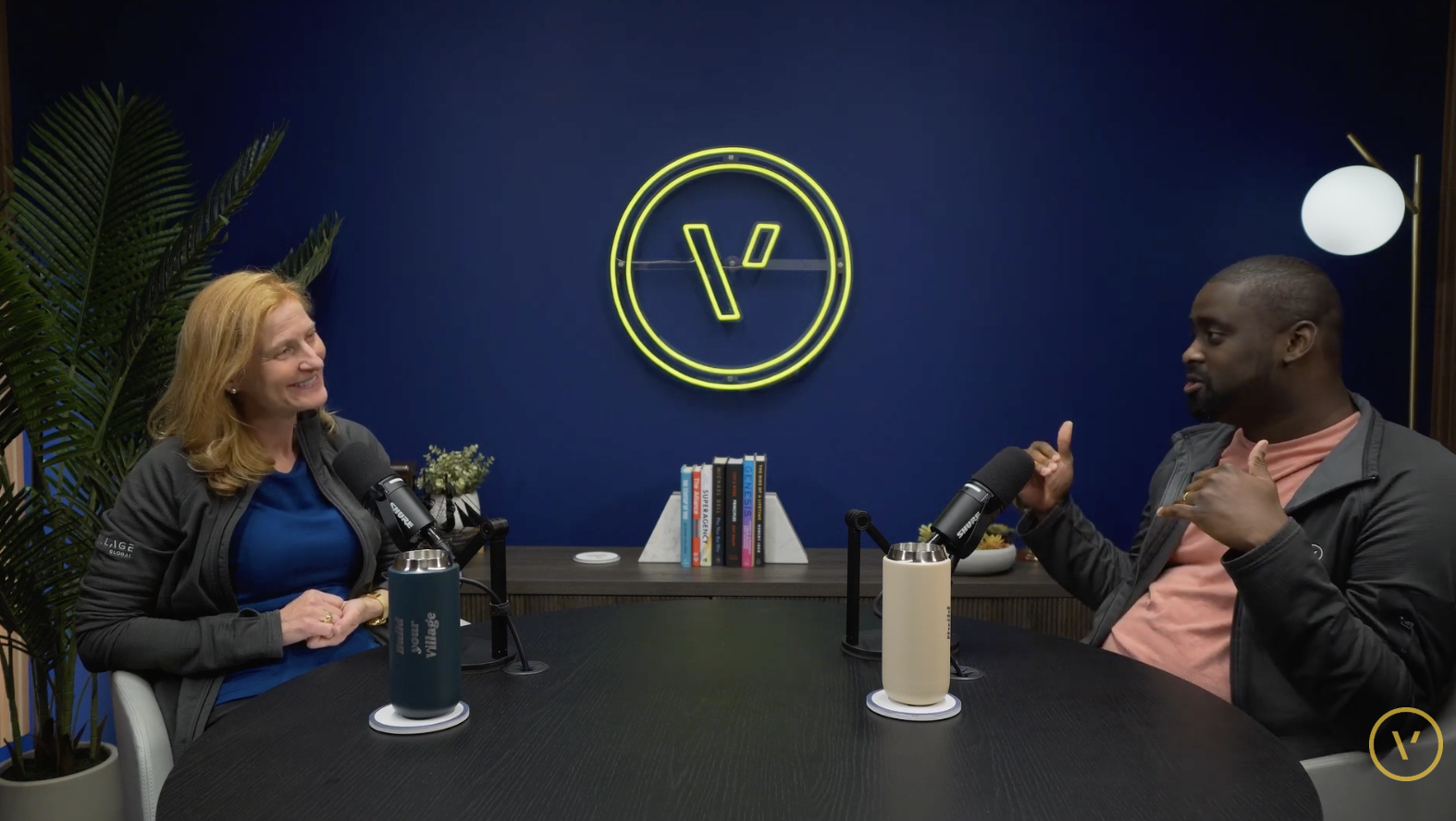
In this episode of the Village Global Podcast, hosted by Anne Dwane, Nicholas talks about what he learned building Forethought, why AI companies need to keep rebuilding themselves as the technology changes, and where he thinks the next generation of AI assistants could go.
Key Insights
The difference was action, not intelligence
Nicholas's early insight at Forethought started with a basic question: what does a customer actually want when they ask for a refund?
Most support bots could explain the company's refund policy. That wasn't enough.
“They want their problem solved. They want an AI that can ask, 'Okay, who are you? I know who you are, and I know our refund policy, and I'm going to decide on the spot, will you get the refund?' And heck, I'm going to issue the PayPal or whatever that may be,” he says.
Forethought saw resolution rates of 70 to 80%, compared with an industry average of around 20 to 30%. The models weren't necessarily the reason for the difference. Forethought was building an AI that could take action instead of simply providing information.
Forethought nearly missed the GPT-3 moment
From the beginning, Forethought followed the latest developments in NLP. The team moved from recurrent neural networks to LSTMs and then transformers as new approaches became available.
When GPT-3 came out, though, they initially saw it as another incremental improvement. Their assumption was that it was essentially a better version of GPT-2, rather than a fundamental shift in what these models could do.
That experience changed how Nicholas thinks about technical reinvention. At Forethought, the team developed a habit of throwing away code when a better approach became available rather than staying attached to what they had already built.
“The average startup, if you're growing, it's a different company every six to nine months, and that was true before AI and it's probably even more compressed now,” he says.
An assumption about his own weakness affected how Nicholas hired
Early investors questioned whether two technical co-founders could sell. Nicholas took that criticism seriously and spent years hiring around what he believed was a weakness.
Eventually, he noticed something that didn't match the assumption. He was the one closing deals. His teammates kept pulling him into pitches and fundraising conversations because they wanted him there.
Looking back, Nicholas sees it as a lesson in how easily founders can internalize other people's assumptions.
“I've learned a lot about myself as a leader and as a CEO and as a founder, you know, like just how you think about hiring decisions, how you think about running a company at scale,” he says.
The problem wasn't that someone had identified a blind spot. It was that he accepted the diagnosis without checking whether it was actually true.
An assistant has to know when not to interrupt
Espa's first version was deliberately proactive. It would text users whenever an incoming email appeared important.
Users didn't like it.
Nicholas and his team narrowed the number of situations in which the assistant would interrupt someone. Instead of notifying users about anything that might matter, Espa would only reach out when it couldn't make a decision itself and the decision was important enough to warrant the interruption.
The response changed. Instead of complaining about notifications, users started describing the interruptions as useful.
For an assistant that is supposed to work proactively, knowing when to stay quiet can be just as important as knowing when to act.
AI assistants could start working with each other
One of the more interesting possibilities Nicholas sees with Espa is what happens when assistants can communicate with other assistants.
If two people using Espa add their assistants to the same conversation, they could handle the scheduling themselves. Take that further and two assistants could potentially work together on a document or memo, with each one bringing the context it has about its own user.
“When you really extrapolate to the future, new paradigms for collaboration, calendaring, and context actually appear, and in so many ways that becomes a weird network effect in the AI age, which I would not have expected for an AI company,” he says.
The more people using these assistants, the more opportunities there are for them to interact with one another.
Nicholas doesn't expect the biggest AI labs to own the personal assistant market
Nicholas's argument isn't that companies like OpenAI or Anthropic lack the technology to build a great personal assistant. He thinks their business incentives point in a different direction.
A genuinely personal assistant needs access to highly personal information while maintaining strong privacy boundaries. Frontier AI companies, meanwhile, have an incentive to collect broad user data to improve their models. Nicholas sees tension between those two goals.
He also expects the major labs to continue prioritizing enterprise opportunities and their core models over highly specialized consumer products.
He compares the opportunity to AI coding. Cursor was able to build a significant business around a specific use case even though the underlying models were available to other companies.
Nicholas thinks the same thing can happen with personal assistants: a company that focuses entirely on making one experience dramatically better can build something valuable on top of the underlying models.
Listen to the full episode on Apple Podcasts, Spotify, YouTube, or wherever you like to listen.
For insights from across the Village Global Network straight to your feed, follow us on X, LinkedIn, YouTube, Instagram, and TikTok.
About the Guest
Deon Nicholas is founder and CEO of Espa Labs, an AI executive assistant for personal and small-business productivity. He previously founded Forethought, an agentic AI customer support company backed by Village Global that scaled to roughly a billion interactions a month before its acquisition by Zendesk, where Nicholas now serves as an advisor.
About the Host
Anne Dwane is co-founder and General Partner at Village Global, a pre-seed venture capital firm chaired by Reid Hoffman that writes first checks at the pre-seed and seed stage. The firm backs founders before consensus forms across all sectors, including consumer, B2B, and AI.
Before Village, Anne co-founded Zinch, which was acquired by Chegg, and led Chegg's enterprise business through its IPO. She previously served as CEO of Military.com, which was acquired by Monster Worldwide. She invests in pre-seed and seed-stage founders.